
- Invested amount
- Total interest
- Invested amount
- —
- Total interest
- —
- Maturity value
- —
Figures are estimates for planning only, not investment or tax advice.
A recurring deposit takes a fixed amount from your account every month and pays a fixed rate on it. This calculator uses the quarterly compounding that banks and post offices apply to RDs.
How it is calculated
Each monthly instalment earns interest only for the months remaining in the tenure, so the first deposit earns far more than the last. The maturity value is the sum of every instalment compounded for its own remaining period at the quarterly rate.
RD or SIP?
An RD gives a contracted return with no market risk, which suits goals under three years. Over longer periods the after-tax return rarely beats inflation, and a debt or equity SIP usually does better for money you will not need soon.
Frequently asked questions
Is RD interest taxable?
Yes, at your slab rate, with TDS once interest crosses the annual threshold.
Can I miss an instalment?
Banks charge a small penalty and post offices allow a limited number of defaults with a fee. Repeated defaults can close the account.
Can I withdraw an RD early?
Yes, with a penalty on the rate. Some banks do not pay interest at all if the RD is closed within three months.
Related calculators
See allRead next
How much do you need to retire? Work backwards from the monthly figure
The corpus number looks impossible until you see how it is built. Then it becomes a monthly instalment.
How much do you need to retire? Work backwards from the monthly figure
The corpus number looks impossible until you see how it is built. Then it becomes a monthly instalment.
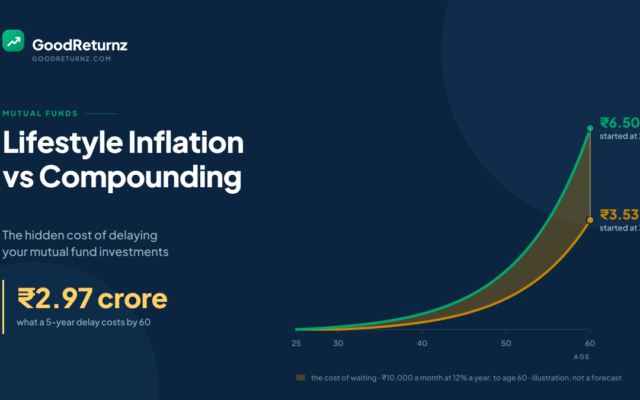
Lifestyle Inflation vs. Compounding: The Hidden Cost of Delaying Mutual Fund Investments
In this articleLifestyle inflation is invisible because it is proportionalWhat a delay actually costsWhy the first years are the expensive…