
- Take-home
- Deductions
- Monthly take-home
- —
- Monthly gross
- —
- Monthly basic
- —
- Monthly PF (both sides)
- —
- Monthly income tax (new regime)
- —
- Annual take-home
- —
Figures are estimates for planning only, not investment or tax advice.
A CTC number includes plenty of money that never reaches your bank account. This calculator breaks a cost-to-company figure into gross pay, deductions and the amount actually credited each month.
What comes out
Variable pay is removed first because it is paid annually and conditionally. Then the employer’s PF contribution — part of CTC but not part of your salary — comes out, followed by your own PF, professional tax and income tax.
How the estimate is built
Basic pay is taken as the share of fixed pay you set (40–50% is typical). PF is that percentage of basic on both sides. Income tax is estimated under the new regime with the ₹75,000 standard deduction. Your actual payslip will differ with allowances, reimbursements and your declared investments.
Frequently asked questions
Why is my take-home so far below my CTC?
Employer PF, gratuity provision and variable pay are all inside CTC but not in your monthly credit. A 25–30% gap is normal.
Can I reduce my PF contribution?
The statutory 12% applies where basic exceeds ₹15,000 in most establishments. Some employers allow a restriction to ₹15,000 of basic.
Should I compare offers on CTC?
Compare monthly take-home and the fixed component. CTC can be inflated with benefits you will never use.
Related calculators
See allRead next
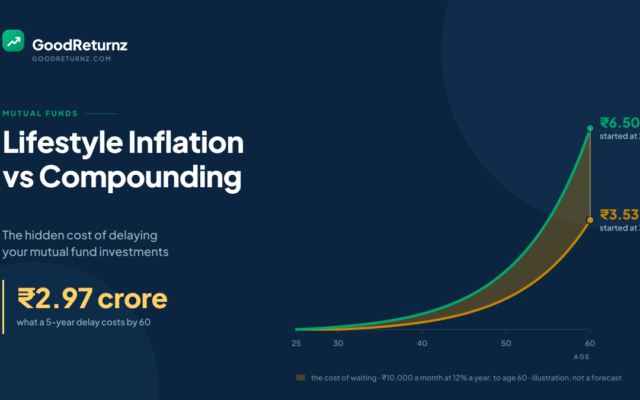
Lifestyle Inflation vs. Compounding: The Hidden Cost of Delaying Mutual Fund Investments
In this articleLifestyle inflation is invisible because it is proportionalWhat a delay actually costsWhy the first years are the expensive…
Step-up SIPs: the ten-minute change that adds 40% to your corpus
Raising your instalment with your salary is the least painful way to invest meaningfully more.
Step-up SIPs: the ten-minute change that adds 40% to your corpus
Raising your instalment with your salary is the least painful way to invest meaningfully more.